Demo 1: Different morphology of megakaryocytes to help and guide to diagnosis
|
|
|
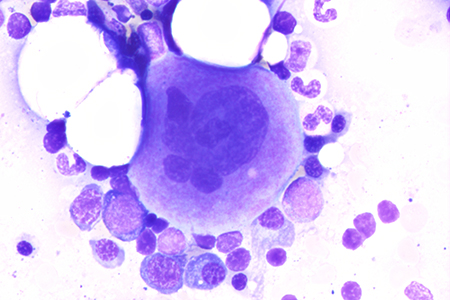
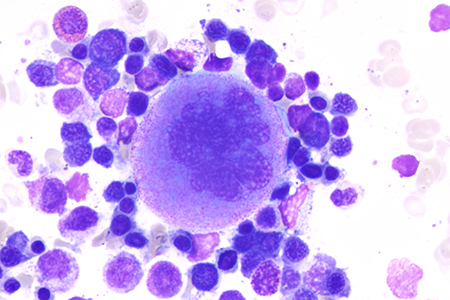
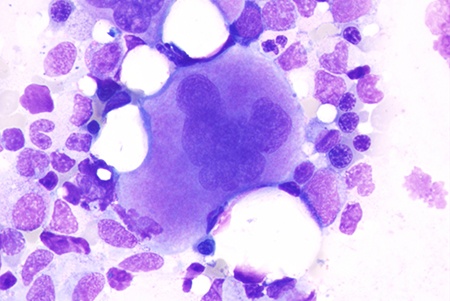
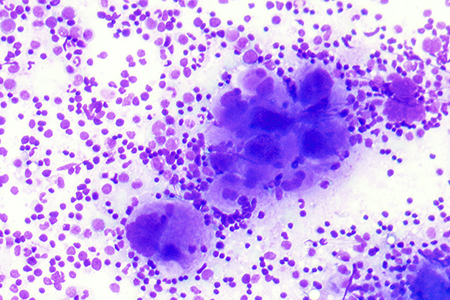
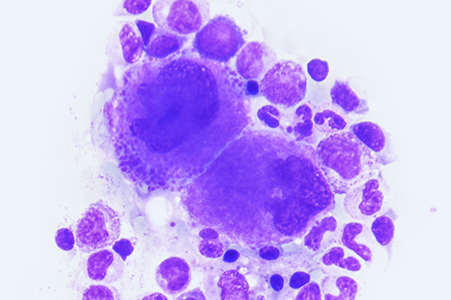
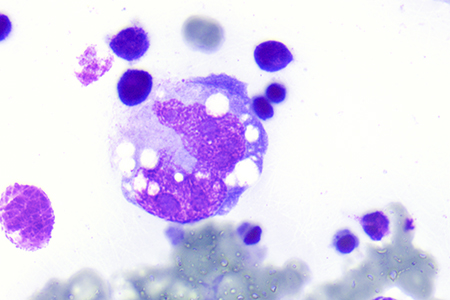
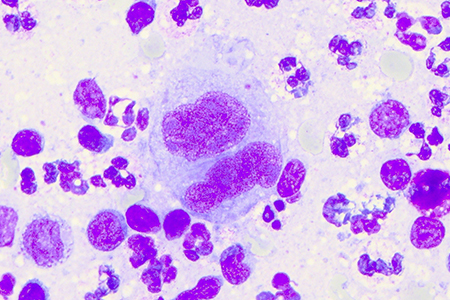
Normal megakaryocytes: Strongly multi-lobulated nucleus with irregular lobes, connected with chromatin threads, with a clumped chromatin structure. Cytoplasma can be anything from basophilic to pink and can contain from none to abundant azurophilic granules |
|
|
|
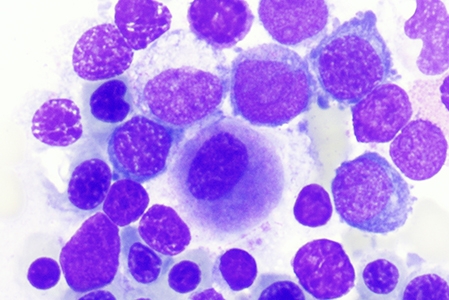
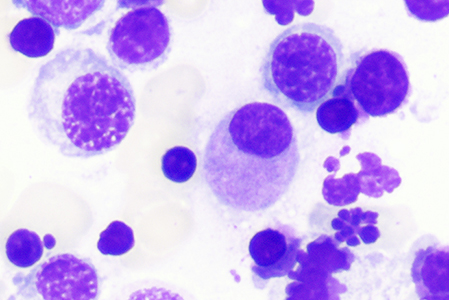
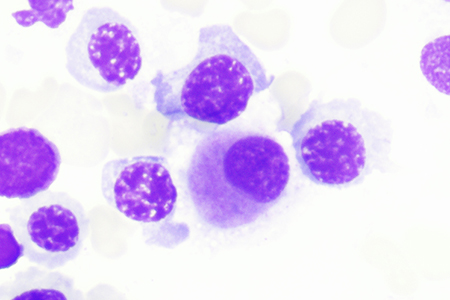
Micromegakaryocytes: mononuclear cell 12-40 µm diameter, sometimes bilobulated, dense chromatin with high nucleas to cytoplasm ratio. Cytoplasm is moderately mature |
|
|
|
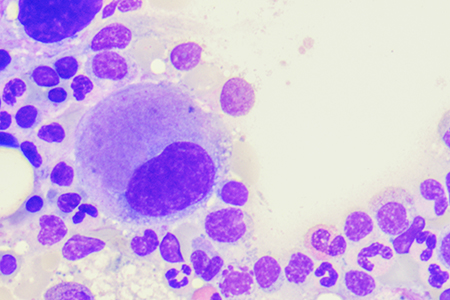
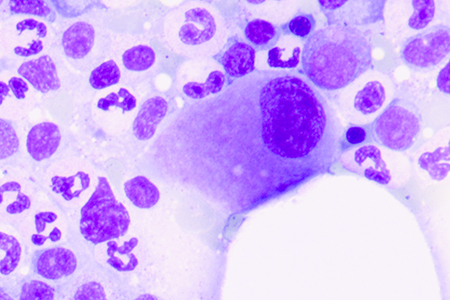
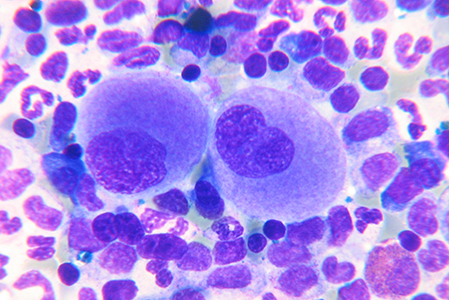
Hypolobulation: normal sized megakaryocyte with hypo- or non-lobulated nucleus, rond to oval shaped, normal chromatin condensation and normal cytoplasm structure. |
|
|
|
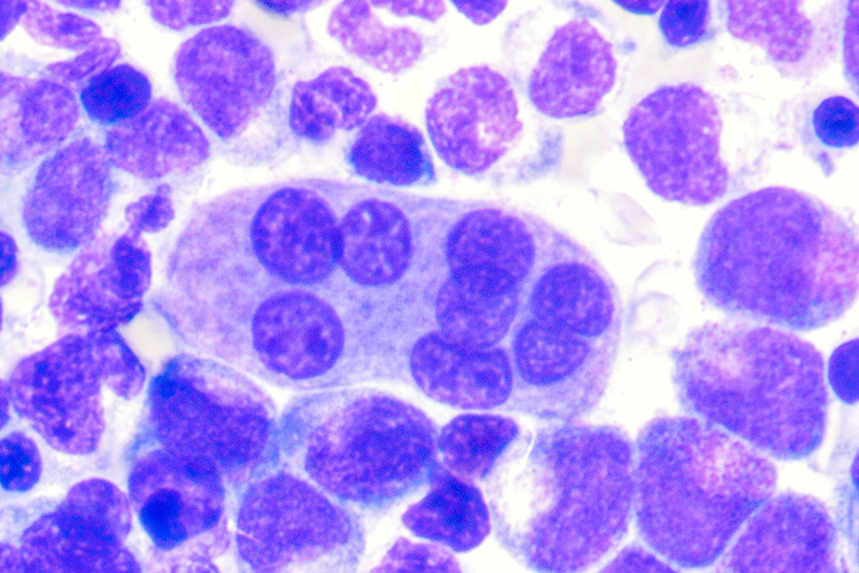
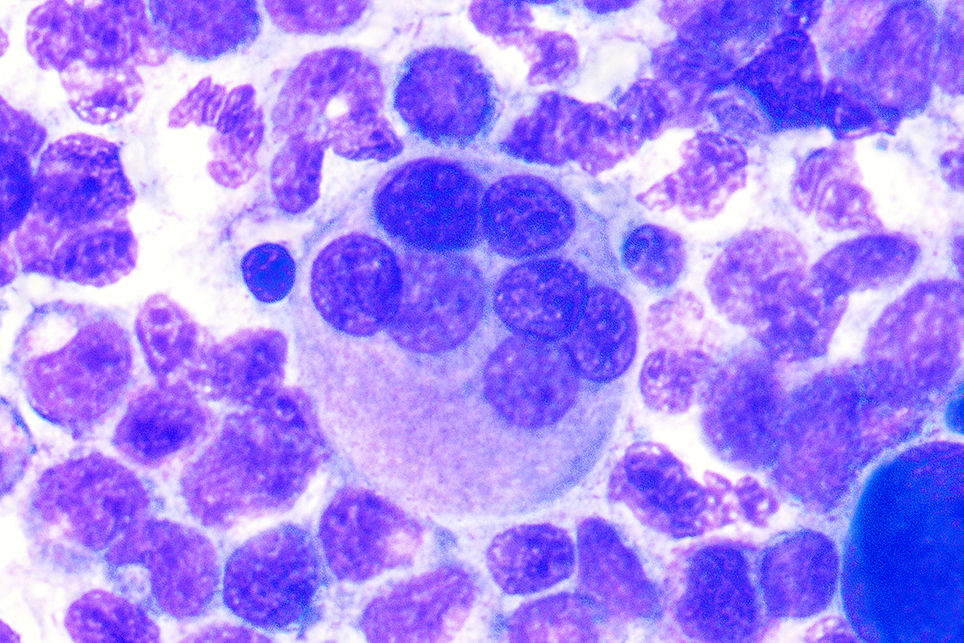
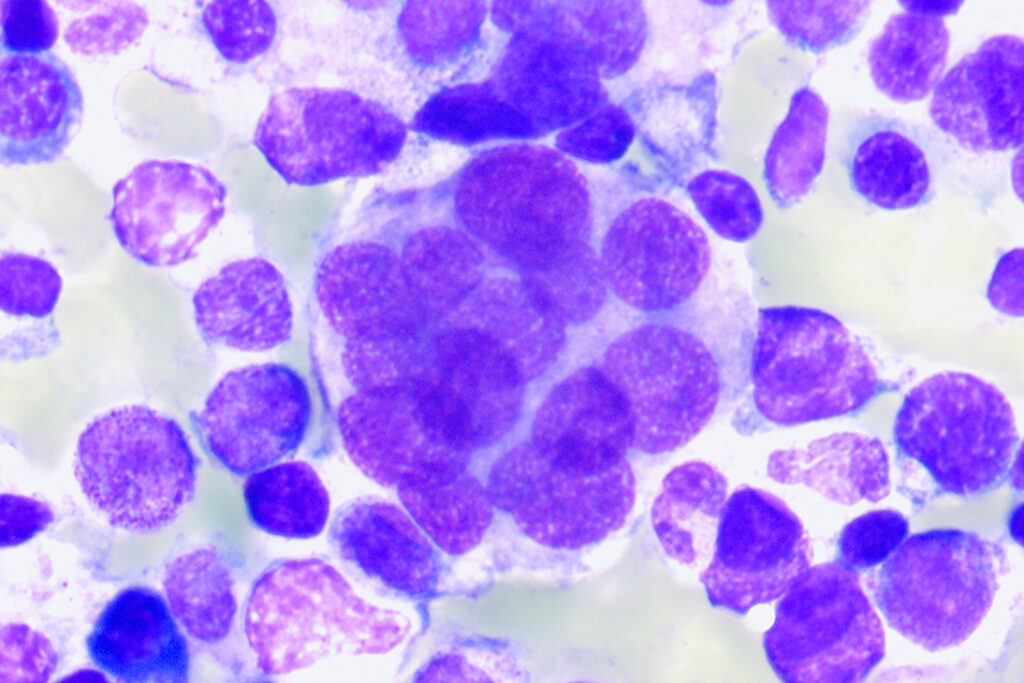
Multilobulation: normal to large megakaryocyte with multiple separate nuclei, usually rond, normal to dense chromatin condensation and normal cytoplasm structure. |
|
|
|
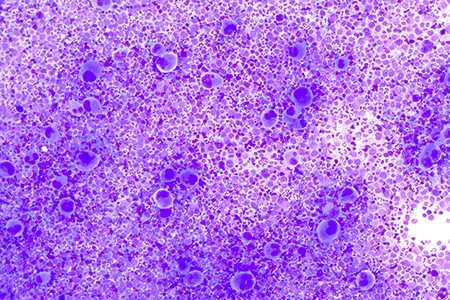
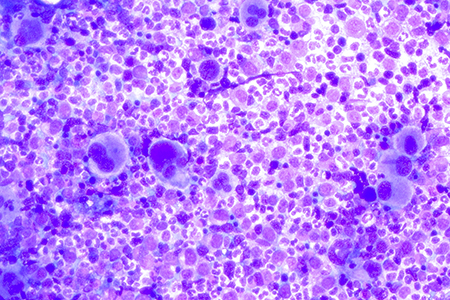
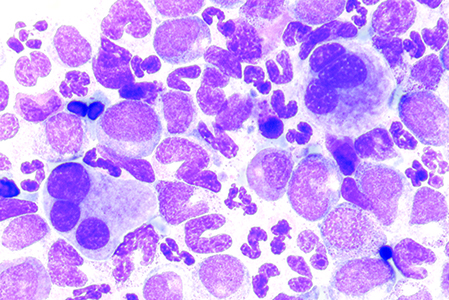
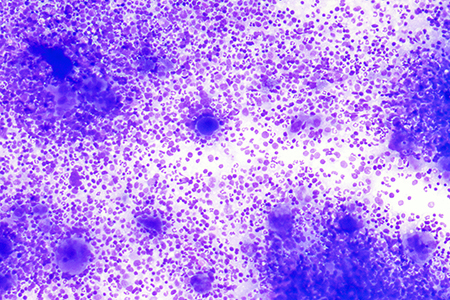
CML: Increased number of smaller megakaryocytes and sometimes hypolobulated. |
|
|
|
PV: Increased number of morphologically normal megakaryocytes, in all different maturation stages. Often clustering. |
|
|
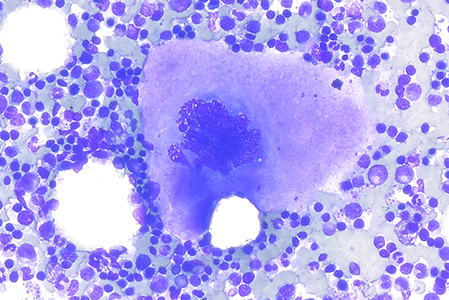
|
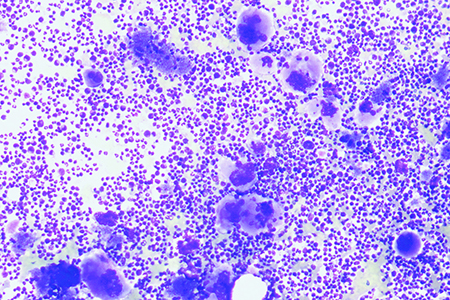
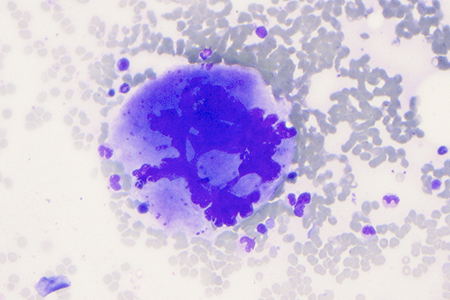
ET: Many megakaryocyten in normocellulair bonemarrow, with bizarre giant megakaryocytes, with abundant cytoplasm and hyperlobulated nucleus (stag-horn shaped) and clumped chromatin. |
|
|
|
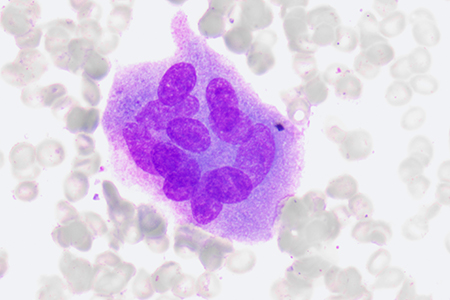
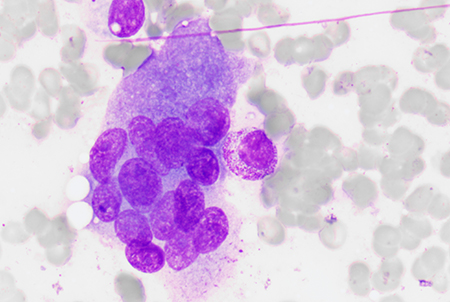
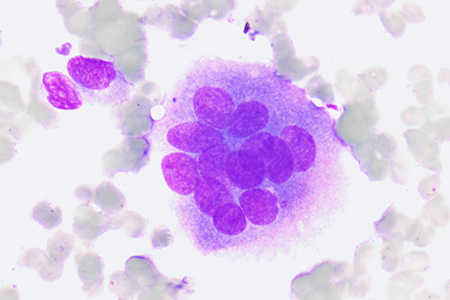
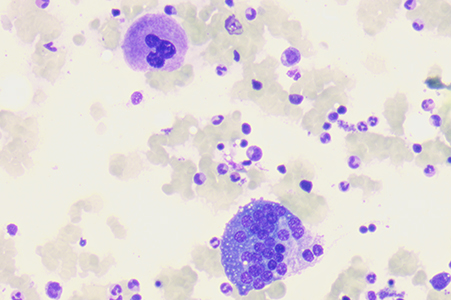
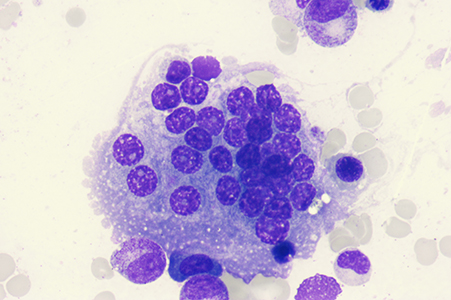
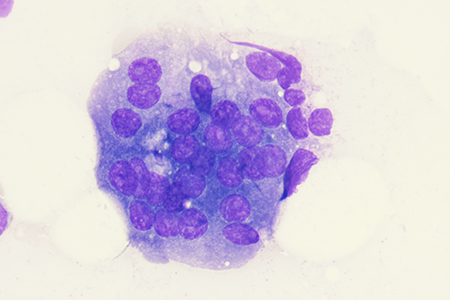
Osteoclasts: Large cells, have multinucleated, well-separated and uniformly sized round to ovoid nuclei. |
|
|
|
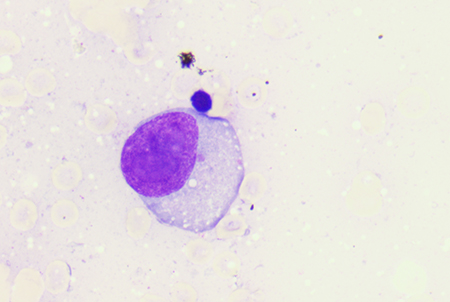
Plasmacells: Multilobulated giant plasmacells |
|
|
|
Morbus Hodgkin: Hodgkin cells: large multilobulated nucleus with coarse chromatin, multiple bluish nucleoli, abundant slightly basophilic cytoplasm. |